Interior Design Success Relies on Precise Drywall Installation
DRYWALL, DRYWALL INSTALLATION, DRYWALL INSTALLER, EXPERT DRYWALL INSTALLER
In the world of high-end interior design, the “finish” is often credited to the architect or the decorator. However, the true bridge between a raw construction site and a refined living space is the drywall installation. While often viewed as a utility, high-quality drywalling is a specialized craft that dictates the success of every subsequent design choice, from paint sheen to architectural lighting.
The Level 5 Standard and Lighting Dynamics
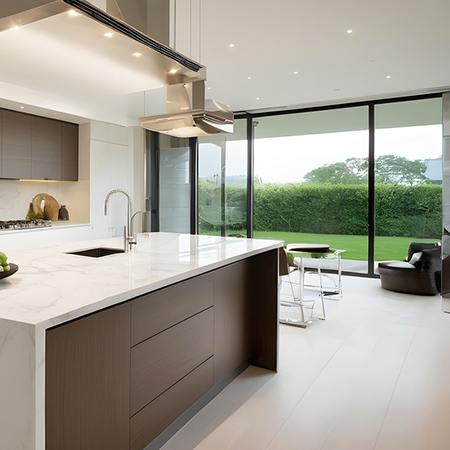
One of the most significant intersections of design and drywall is the management of light. Modern interior trends favor large-format windows and “wall-washing” recessed lighting. These elements create grazing light, which strikes the wall at an acute angle and reveals even the slightest architectural inconsistency.
To achieve the seamless look required for minimalist aesthetics, designers increasingly specify a Level 5 Finish. This process involves:
- The Skim Coat: Applying a thin layer of joint compound over the entire surface, not just the seams.
- Texture Uniformity: Eliminating the “photographing” effect, where the difference in porosity between the paper and the joint compound shows through the paint.
Without this objective attention to the substrate, expensive designer paints will fail to produce their intended effect.
Minimalism and the Absence of Trim
Traditional interior design often utilizes crown molding, thick baseboards, and ornate casings to mask the transition points between different planes. Modernism and minimalism, however, strips these ornaments away.
Trends such as shadow gaps (reglet trims) and flush-mount baseboards require an expert drywall installer to work with zero margin for error. In these scenarios, the drywall edge is the finished architectural detail. If the corners are not perfectly plumb or the beads are not set with laser-level accuracy, the geometric “cleanness” of the room is compromised. With this kind of design, the drywaller’s precision effectively becomes the room’s primary ornament.
Acoustics: The Foundation of Luxury
A significant but invisible aspect of interior design is the “acoustic thumbprint” of a room. A space that echoes or allows sound leakage feels cold and unfinished, regardless of the furniture quality. Professional drywall installers contribute to the design’s sensory experience through:
- Mass-Loaded Vinyl & Sound-Dampening Boards: Utilizing specialized gypsum cores to lower decibel transfer.
- Staggered Stud Layouts: Ensuring that the wall assembly itself acts as a barrier to vibration.
The relationship between the drywall installer and the interior designer is one of necessity. The drywaller provides the “skeletal integrity” of the room’s visual plane. When the substrate is handled with an objective eye for geometry and light, the designer’s vision is allowed to shine without the distraction of structural imperfections.