

When Should You Skim Coat Drywall?
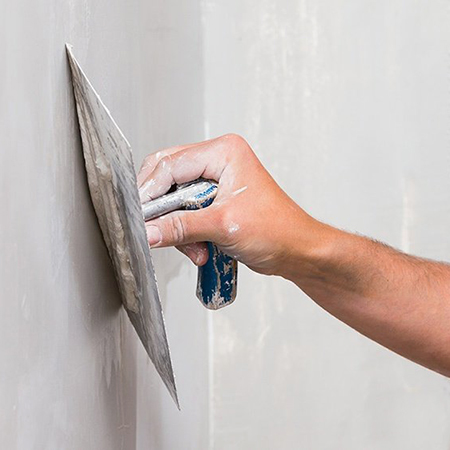 One of the best ways to make unsightly walls and ceilings look smooth and clean again is to skim coat the drywall. Also known as drywall finishing, skim coating levels the surface of a wall and repairs damage, such as minor cracks and stains. The skim coat process is also an important part of finishing a new installation.
To skim coat drywall, a thin layer of joint compound is applied by hand, paint roller, or spray rig. The compound is then smoothed out with a drywall knife or trowel, allowed to dry thoroughly, and then sanded. Two skim coats may be required to achieve a uniform surface.
Here are the most common reasons for applying skim coat to walls or ceilings:
Old or Damaged Surfaces
The walls inside a home or professional building can take a lot of abuse over the years. Scuff marks, stains, dents, and cracks are some examples of the wall damage that can occur. Skim coating can make those repairs. Skim coating is also a good solution for smoothing over dated, textured ceiling surfaces, such as “popcorn” ceilings. Covering over such ceilings, however, is a messy, dusty, labor-intensive, time-consuming process, which is why experts recommend hiring a drywall professional.
New Installations
New drywall installations must be skim coated. This important process ensures you will end up with a uniform surface to prime and paint. If you don’t skim coat new drywall, you can sometimes see where the paint has absorbed differently over the drywall paper compared to the joint compound. In addition, skim coating covers tape joints and hides the seams where drywall boards meet.
Damage Caused by Wallpaper
Wallpaper that seemed like a good idea when you put it up, may no longer please you. Unfortunately, removing wallpaper is a time-consuming, difficult process that requires removing not just the paper, but also the glue behind it. Once the paper’s gone, glue remnants may remain, leaving an uneven wall surface. Skim coating will restore your drywall to a uniform, smooth surface once again.
Damage Caused by Mold
Mold is potentially harmful, depending on the type. Black mold, especially, can cause serious health problems. With any type of mild, once it has been removed, you will be left with either a stained wall or surface damage. If you have mold on your drywall, experts recommend that you call in a professional who will make sure it’s completely removed and take care of the often tricky repairs.
In Conclusion
Skim coating drywall is the best technique for bringing walls and ceilings back to life after repairs, and to properly finish a new drywall installation.
If your walls need attention, consider hiring a professional. A drywall installer will tape, apply skim coat layers with expertise, and properly sand between layers. The result will be ultra-smooth, professional-looking walls.
Frequently Asked Questions About Drywall
What is Drywall?
Drywall has several different names, such as wallboard, gypsum board, or Sheetrock® Brand panels. It is made from a mineral called gypsum, which is naturally found in sedimentary rocks. To make drywall, processed gypsum is pressed between two sheets of thick paperboard backing.
Where is drywall used?
Drywall is only used on the interior walls of houses and buildings. It cannot be used for exterior applications, as it cannot stand up to outside weather. Drywall is an ideal interior building material, as it is fast to install, durable, and can be repaired with relative ease when damaged. Drywall is also great because of its fire-resistant properties—gypsum is non-combustible and does not burn easily.
Why is drywall called drywall?
Before drywall, plaster was the prevailing method of building walls. The material was installed wet and took an extremely long time to dry. Each layer needed to dry completely before the next one could be added. This made the process long and arduous. The name “drywall” came about to differentiate the new product from plaster, because unlike plaster, drywall installations do not need water.
When walls were plastered, other construction often had to stop until the walls were completely dry. When drywall entered the construction industry, wall installations became faster. Plaster soon became obsolete. Note: In certain parts of the country, such as Massachusetts, plaster is still used in wall construction.
Why is drywall sometimes called Sheetrock?
Sheetrock is a registered trademark of the USG Corporation for their brand of drywall panels. A couple of chemicals allow the Sheetrock formula to be patented. Otherwise, there is almost no difference between Sheetrock and other drywall panels. They all can be used for wall and ceiling installations.
How big a drywall repair can I handle myself?
Not all drywall damage requires expert help. As a general rule, any damage under 6 inches can be a DIY repair, following the steps in our Drywall Repair article. However, larger holes need the expertise of a professional, who has all the necessary tools, including an electronic stud finder, drywall saw, and inside corner knife.
Can damaged drywall be recycled once it has been removed?
Yes, it usually can. You may have to do a little research online to find a recycling transfer station in your area that will accept it, especially if it contains asbestos. Note that moldy drywall cannot be recycled and should be handled and disposed of with care. We advise that you wear rubber gloves, eye goggles, and a respirator during removal. Mold-damaged drywall should always be placed in well-sealed plastic bags before disposal.
Drywall Repair
Is it Better to Repair or Replace Drywall?
The walls inside most homes are constructed with drywall and not plaster. Drywall is vulnerable to cracks, dents, and holes. There is no doubt that an accident will occur at some point, leaving you with the task of patching a hole in your drywall. But unless your home has unpredictable construction (as many older homes do), you can repair small dings and dents yourself.
Use this rule of thumb to determine whether to call an expert. Small straightforward holes (six inches or less) can probably be self-repaired. But when drywall damage is more severe, enlist the expertise of a professional taper.
Drywall holes are unsightly. But they can get even worse if left untreated. If you experience a dent or hole in your wall, it is best to repair it as soon as possible. Use the steps below to repair small holes.
How to Repair a Small Dent in Your Drywall
- Use a scraper tool to scrape away loose debris (paint, etc.).
- Apply a lightweight spackle over the dent with a joint knife and let it dry. It will take several hours to fully dry.
- Sand the area you spackled.
- Apply a second coat of spackle over the first coat and let that second coat completely dry.
- Sand the area once again until completely smooth.
- Apply a third coat of spackle over the second coat and let that third coat fully dry.
- Sand the area a third time until completely smooth.
- You are now ready to re-paint the wall.
How to Repair a Popped Nail Head
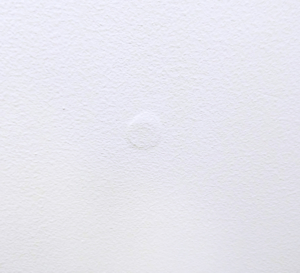 If you have driven a nail into a wall and it has popped out, you can follow these steps to repair it:
- Drive in a drywall screw about 1-1/2 inches above or below the popped nail to stabilize the drywall.
- Drive in the popped nail.
- Apply a thin layer of spackle over the nail and the screw and allow it to dry completely.
- Lightly sand the area.
You are now ready to re-paint the smooth, repaired wall. Once painted, your wall will be in the condition it was in before the damage occurred, and no one will be the wiser.
Spackle or Joint Compound?
Spackle is most often used as a filler. It works best on holes that do not completely penetrate through a wall. In general, spackle is lighter in consistency and better suited to smaller holes. For larger holes, use joint compound as its properties are stronger and will hold up better to the task at hand.
When to Call in the Experts
Patch jobs require exact precision in cutting cleanly around the damage and replacing it with a new piece of drywall. You may also need to purchase extra tools for the job. If your drywall damage exceeds six inches or involves a patch job (a drywall piece cut out and fit into the existing wall), you may prefer to call an expert.
Five Most Commons Causes of Drywall Damage
Drywall damage can happen in any home, not just older ones. If you notice holes, cracks or buckling in your walls, these five common conditions will help you assess the cause and the best course of action to take.
Plumbing Leaks
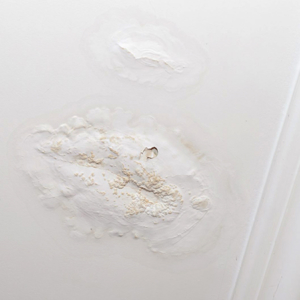 One of the leading causes of compromised drywall is water damage through older or improperly installed plumbing. Leaking pipes can cause issues such as bulging, buckling, and loss of structural integrity.
An additional concern is the possibility of dangerous black mold growing behind the walls. This growth can remain unseen but will cause health issues to the inhabitants of a home over time.
If you notice any of the issues above, have your drywall inspected as soon as possible. You may also need to call in a plumber to repair the damaged water line. After the plumbing is repaired, you can safely replace or patch the drywall.
Poor Fastening
Your drywall was most likely installed with joint-fastening tape. As time goes on, this thick tape can loosen due to moisture or age When this happens, the structural integrity of drywall can become compromised over time, and nail or screw heads can become visible through the wall. This is also caused by fasteners that were not set firmly in the stud.
If you notice a nail or screw head showing through your drywall, ask an expert to inspect the damage. The process for repairing each condition is different.
Termite Damage
Termites are a major issue for some homeowners. This kind of damage can be identified by pinholes, a hollow sound when the wall is tapped, damaged paint, and wood damage. If you notice any of these conditions, call an exterminator to determine if there is an infestation.
House Settling
A crack in drywall is a safety issue, especially when in a ceiling. Sometimes this circumstance is caused by common house settling, but it is best not to ignore it. A crack may only get larger and can turn into an expensive and time-consuming repair.
Roof Damage
If you notice cracking reoccurring often in your ceiling, consider having your roof inspected, in addition to the drywall damage. Any kind of hole in a wall is potentially a structural issue and should be taken seriously, especially when occurring in a ceiling.
The Highest Quality Drywall Installation Services for Your Home or Business
Call Today: (860) 339-6975
Providing drywall and all related services to New Haven, Middlesex, and New London Counties and commercial customers in Connecticut statewide
© Copyright 2025 The Drywall Specialist, All Rights reserved | Licensed #HIC 0659945 | Fully Insured